



This PDF includes the detailed methodology and additional findings. Click the button to receive your copy.

Chairman, Endeavor Brazil

I have always believed that international expansion is less about pre-built formulas and more about intentionality.
In Brazil, we have a unique advantage: a market with such scale and complexity that internationalization is not a survival requirement, but an option. Yet this comfort can be a double-edged sword, potentially limiting our ambition — and, as a result, our true potential.
For the entrepreneurs who have expanded or are planning to expand their operations into new countries, I would like to share a few reflections:
Not every scale-up will become global by default, but the future calls for greater ambition. We need to play both offense and defense.
Let’s build not only bigger companies, but also companies that are more human and accessible.
Moving forward with intention and optimism.
We asked 5 Endeavor Entrepreneurs to share their stories about international expansion. They told us how they captured global opportunities starting from a large domestic market.

Leading the Company’s Expansion from the Next Frontier
Mariano explains why moving abroad was part of VTEX’s geo-expansion strategy, and how Brazilian engineering became a key advantage in the company’s global push.

If Expansion Isn’t a Top 3 Priority, Don’t Do It

For João, international expansion only works when it becomes a top strategic priority. That means founders staying close to the markets they’re entering — traveling often and building the trust networks that make global growth possible.

We Knew We Could Build a Global Product

From the beginning, the Pismo founders believed they could build a global product. Turning that conviction into reality required bringing in senior talent who knew the customers, the markets, and how to represent the company abroad.

If There’s No Geographic Advantage, Why Stay Local?

Realizing geography offered no competitive advantage, Alessio built Pipefy for global markets from day one.

Building Global from Southern Brazil
International expansion was always part of Nelogica’s long-term ambition. Marcos reflects on how M&A helped accelerate that journey, and how building for investors across different markets required learning to navigate culture, regulation, and strategy at a global scale.
Brazil’s market is big enough to sustain significant growth, which creates space (and sometimes comfort) to delay international moves. At the same time, the country has consistently matured its entrepreneurial ecosystem and global exposure.
In 2025, the primary growth priority reported by the 161 Brazilian Endeavor Entrepreneurs was market-related. For 26% of entrepreneurs, global expansion emerged as a specific priority.
Yet the path is far from straightforward. International expansion requires complex business and leadership capabilities that go well beyond market entry.
In order to better understand this dynamic, we conducted a national survey with 101 Brazilian Scale-Up founders — primarily from the Endeavor Network — to capture their expectations and experiences around international expansion. We also conducted 20 in-depth interviews with entrepreneurs and ecosystem experts.
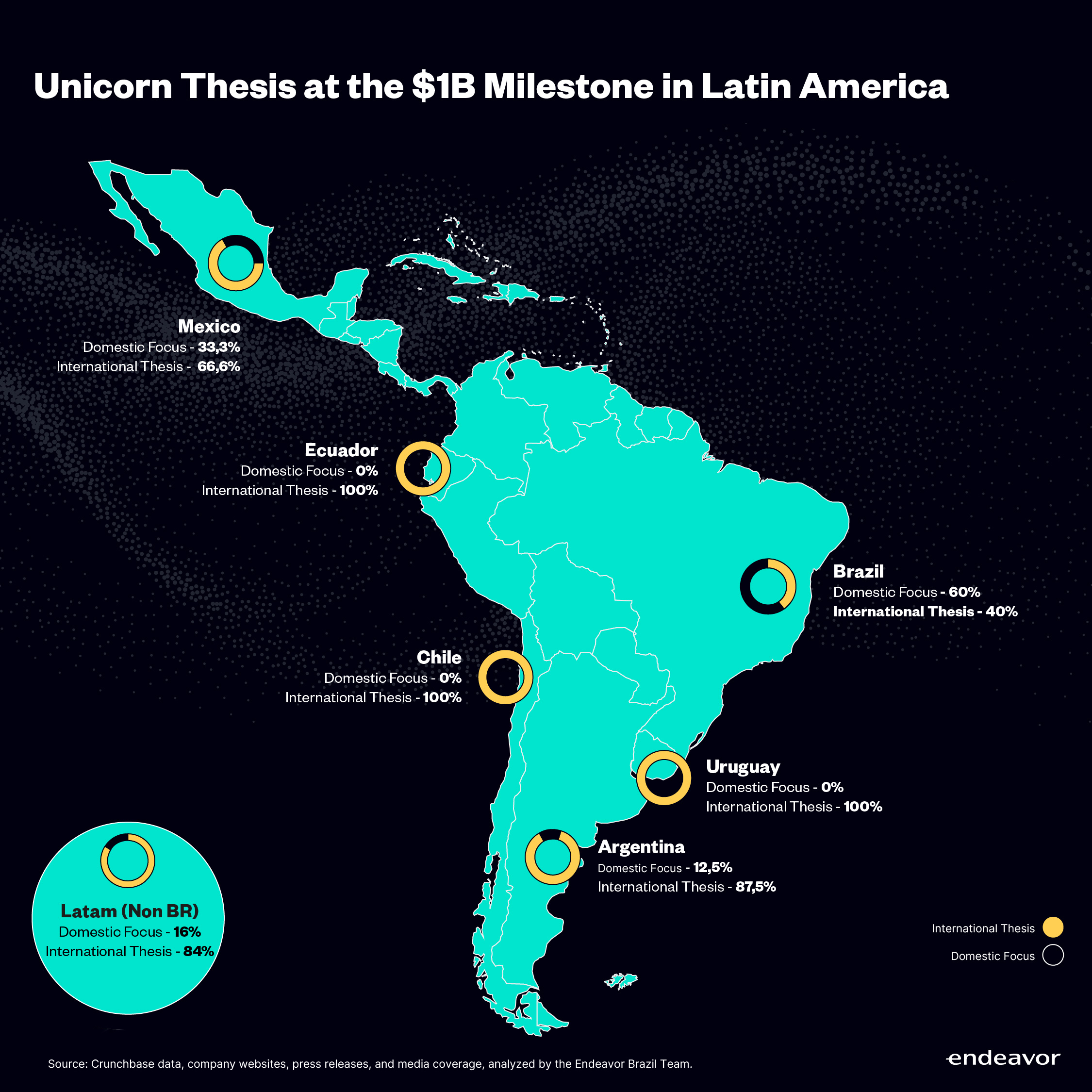
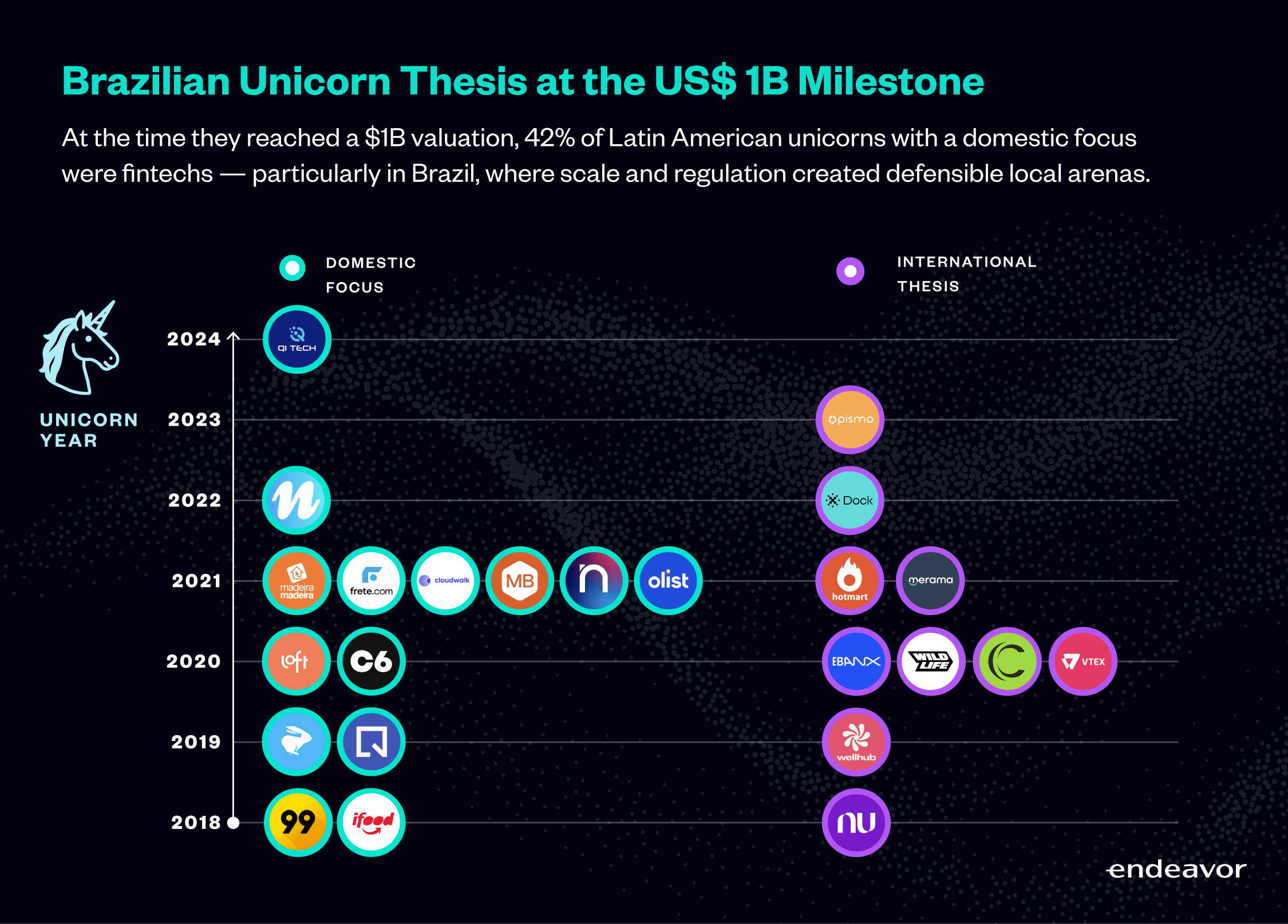
In parallel, we analyzed 50 unicorns — 25 from Brazil and 25 from across Latin America — assessing whether their core business thesis was predominantly domestic or inherently global at the time they reached a $1B valuation.
In emerging markets, rigid adherence to imported growth formulas can become a blind spot rather than a competitive edge. At the same time, excessive comfort in the Brazilian market can erode ambition, limiting a company’s long-term impact before fully testing its potential beyond borders.
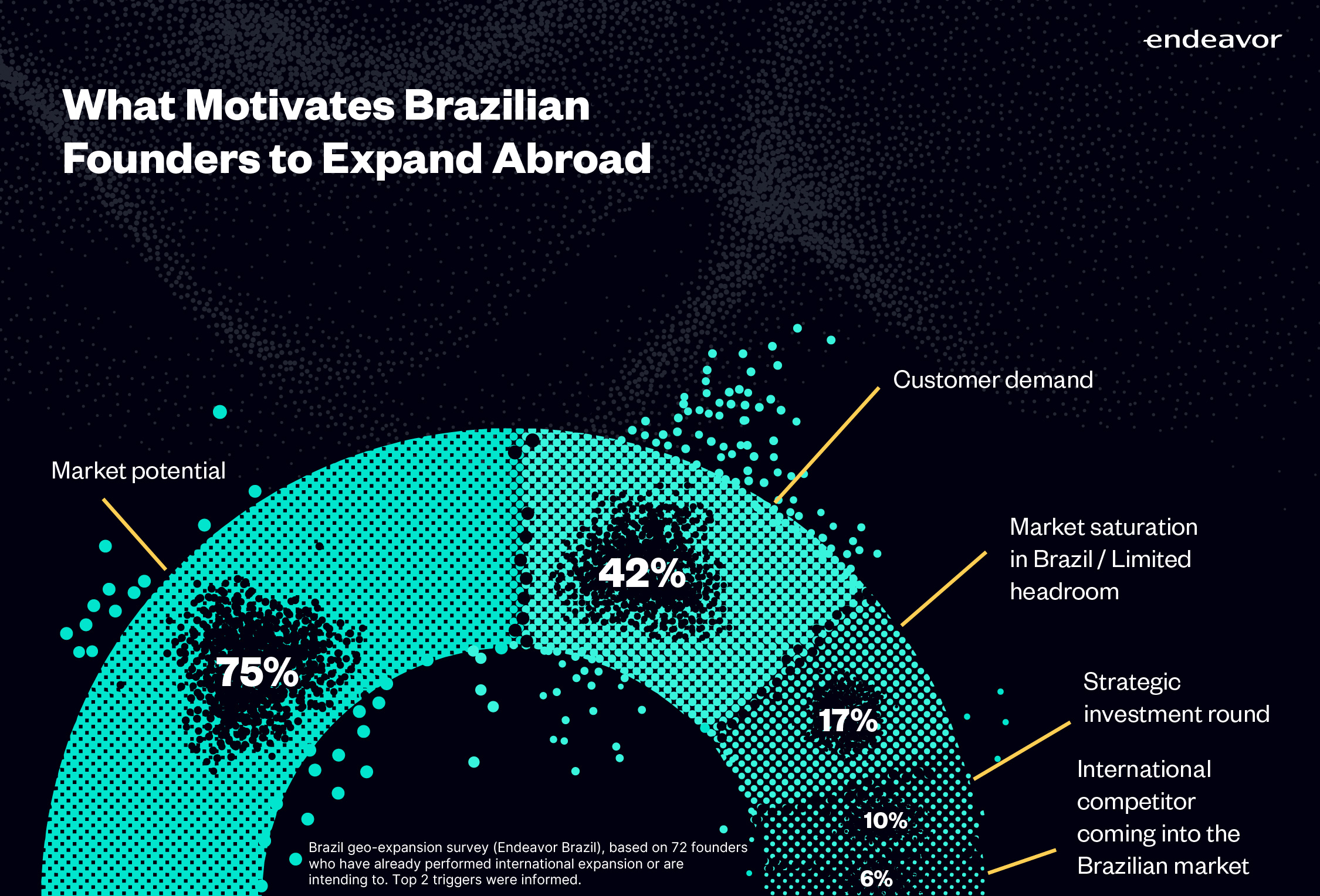
While market potential is cited as the main trigger for expansion (75%), only 17% report expanding due to domestic market saturation and just 6% feel threatened by international competitors.
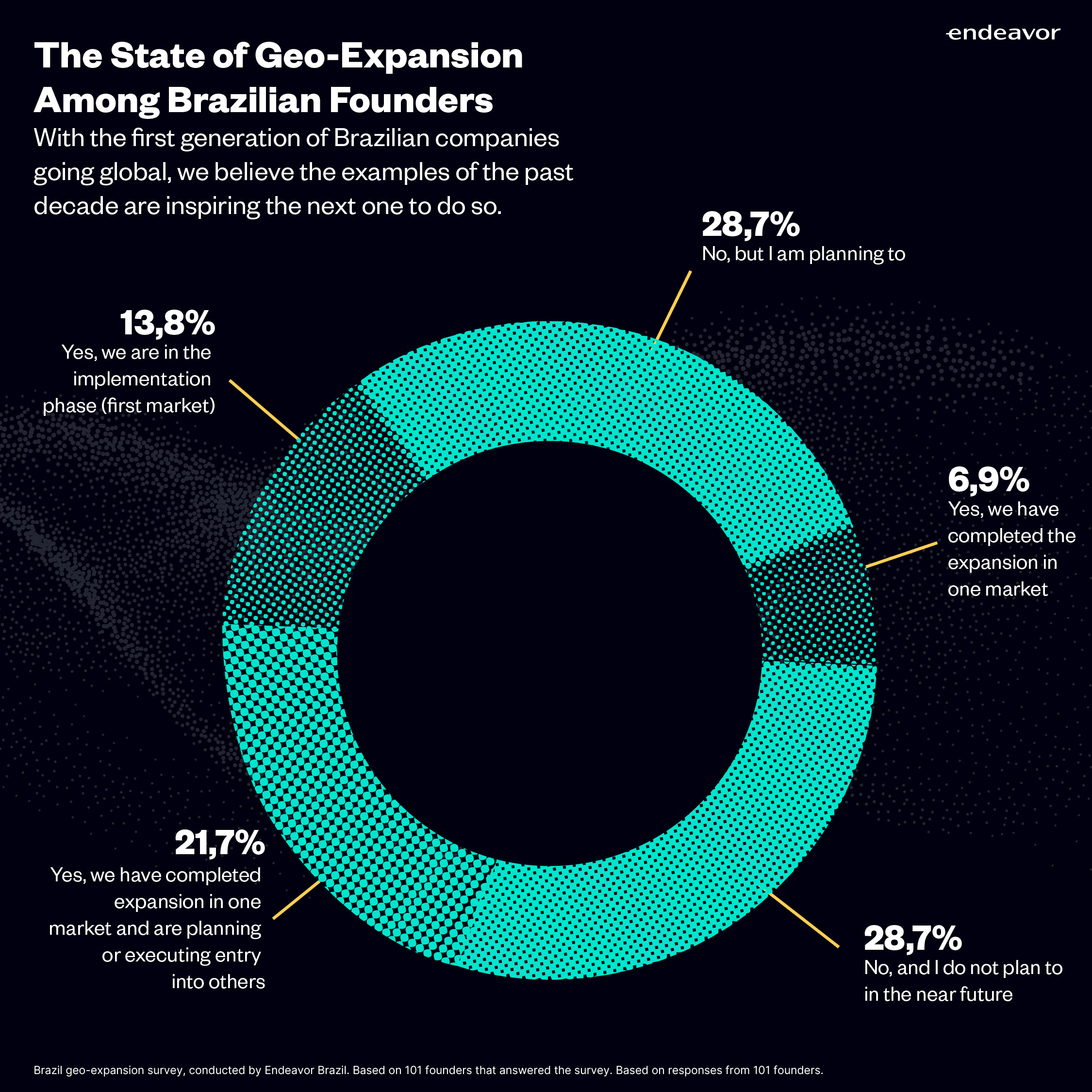
Among companies founded between 2015 and 2019, 44% have already expanded internationally and another 28% are planning to. Among the newer generation ( founded between 2020–2024), 33% have already begun expanding, while 29% report plans to do so.
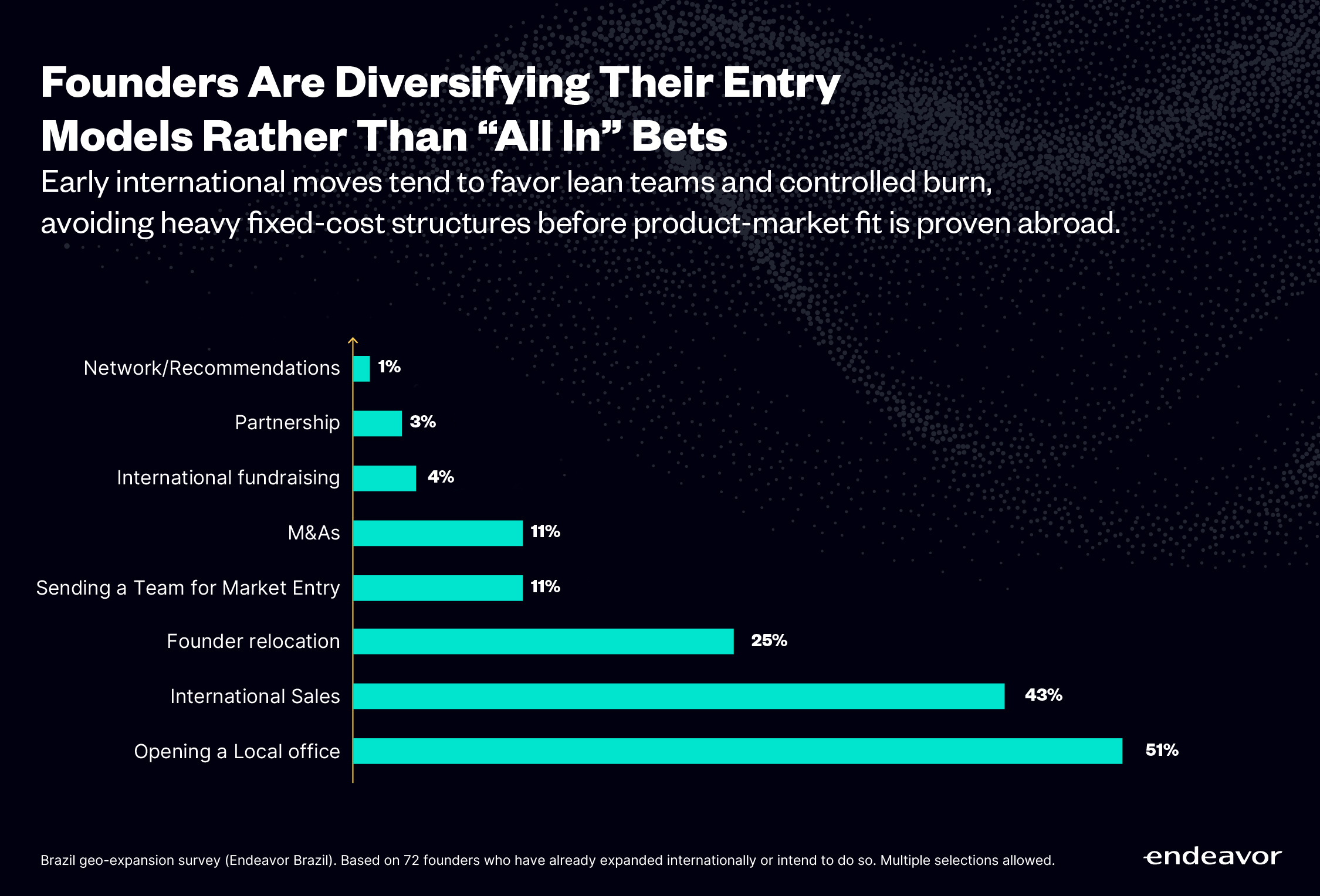
We identified at least 8 distinct entry paths used by Brazilian founders. The two most common are opening a local office, adopted by 51% of founders, and international sales, used by 43%.
Brazil, home to the largest population in Latin America with over 214 million people, and ranked among the top 10 largest global economies, is a sufficiently dynamic market to support “Brazil-first strategies”.
That dynamic shifts quickly in smaller economies. In countries such as Argentina and Colombia, with nearly a quarter of the Brazilian population, a greater share of unicorns were built with an international thesis.
When they reached a $1B valuation, 60% of the 25 Brazilian unicorns had a predominantly domestic thesis, compared to just 16% of unicorns from the rest of Latin America.
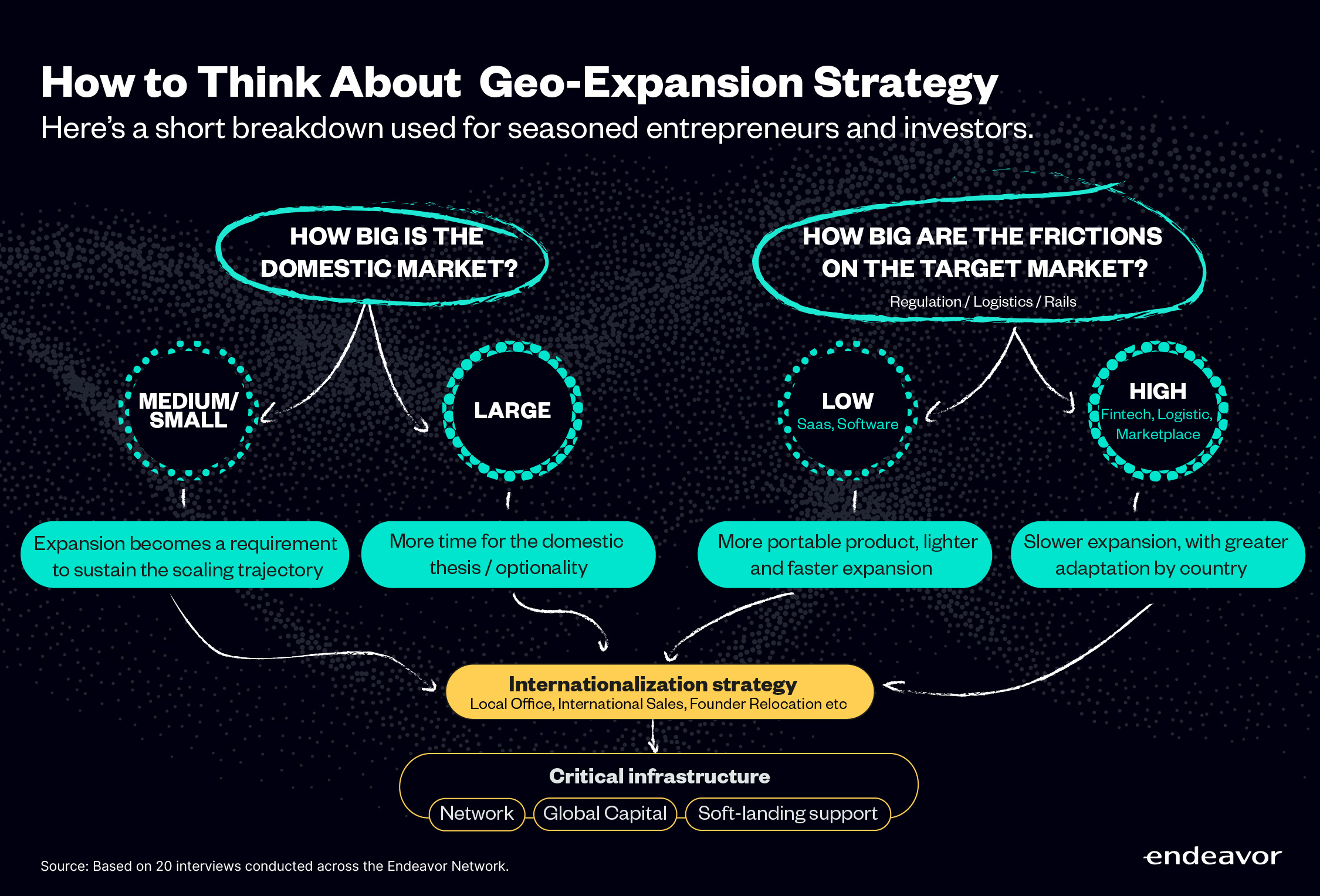
International expansion tends to be more common in sectors with more portable models, such as SaaS, marketplaces, and delivery platforms. Nearly 75% of SaaS unicorns in Latin America were built with an international thesis. In fintech, that share is lower (53%), likely reflecting the regulatory requirements that make cross-border scaling more complex.
Still, Brazil remains a powerful domestic market even for SaaS. According to Riverwood Capital, 93% of revenue from Brazilian SaaS companies still comes from the domestic market, suggesting a more locally anchored growth profile.
In absolute terms, Brazil still concentrates more unicorns with an international thesis than any other country in the region individually. However, the data reinforces an optionality (flexibility to pursue multiple future paths): the Brazilian entrepreneur can choose when to internationalize.
In our survey, only 17% of founders cite the saturation of the Brazilian market or limitation in local growth as motivation for expansion, and only 6% felt threatened by the entry of an international competitor.
This optionality creates both advantages and trade-offs. It can reduce the sense of urgency for expansion, making it difficult to develop a global mindset. Even the founders committed to international expansion might end up being frequently demanded by the core business in Brazil, where opportunities seem more immediate and predictable.

Michele Levy, Ilhabela Holdings
We do not expect every next Brazilian scale-up to be global by default. But the share of companies that view international expansion as a core part of their growth strategy is steadily increasing.
According to our survey responses, the global ambition among founders is increasing, even if it is not yet universal.
Among companies founded between 2015 and 2019, 44% implemented international expansion and 28% are in the planning phase. Among the newer generation of companies (founded between 2020 and 2024), 33% have already begun expanding, and 29% report plans to do so.
Founded: 2016
Founders: Ricardo Josuá, Daniela Binatti, Marcelo Parise and Juliana Motta.
Operations and clients around the globe, including Latin America, Europe, Asia and North America.
Strategy: Globally experienced talent for B2B Enterprise
Pismo embodies a global ambition embedded from inception. Founded in 2016, as a cloud-native payments and core banking platform, it entered a sector long dominated by global incumbents, where being international was a prerequisite to compete, and went on to build a solution robust enough to be acquired by Visa. Before its acquisition, Pismo was already operating in five countries, including India and Australia. Two years after being acquired by Visa, in January 2026, Pismo had expanded to 16 countries, including the United States, the United Kingdom, and the Netherlands, reinforcing how building for the world from day one can shape both scale and outcome.
The data from our survey suggests that global ambition is forming earlier in the company lifecycle. Still, any expansion is going to be carefully planned. Among founders planning to expand, only 14% intend to start within the next six months. Most (65%) anticipate expanding within two years, while 21% project a three-to-five year horizon.
International expansion is not driven by founder ambition or market size alone. External forces, from currency cycles to global liquidity, can accelerate or delay these moves.
For founders operating from an emerging economy such as Brazil, a few macro signals are worth watching:
Revenue diversification across currencies acts as a hedge against BRL/USD volatility. In 2025, the Dollar falling to ~R$5.30 lowered the cost of operating in the U.S., accelerating incorporation and expansion plans.
Global liquidity conditions dictate risk appetite.
The 2019–2021 liquidity cycle fueled aggressive cross-border expansion backed by foreign VCs. In contrast, 2022–2023 tightening led startups to retrench and prioritize domestic consolidation. In 2024–2025, VC activity has shown signs of recovery, but with greater selectivity — favoring expansion strategies grounded in validated demand rather than speculative global positioning.
Trade diplomacy lowers the cost of regional and global scaling. Brazil has expanded trade agreements, including EU–Mercosur (2026), Mercosur–EFTA (2025), Singapore (2023), India (2025), Chile (2022), and Israel (2022).
Technology waves — from AI, to fintech infrastructure, and digital platforms — now diffuse globally and rapidly. As a result, founders face increasing pressure to integrate into global innovation.
Regulation, logistics infrastructure, and payment rails determine how portable a business model is. The higher the local friction (eg. Fintech), the more expansion requires re-execution country by country.
In today’s global landscape, technology waves spread rapidly across borders, accelerating competition. In this context, identifying structural similarities across markets can make international expansion a logical next step.

In conversations with specialists from the Endeavor Network, there is a very mature understanding that there is no ideal moment for expansion.
The assumption that remaining local is a sign of inertia can overlook the challenges and opportunities of building a company within the Brazilian market. The founder’s experience is far more nuanced.
The timing of expansion is directly linked to the nature of the product, the business model, and the strategic ambition of the company.
Regardless of industry, business model, or stage of growth, founders pursuing international expansion must have strong conviction in their product’s differentiation (right to win) before entering a new market.

Bruno Lino, Valutia

Bernardo Piquet
Geo-expansion is not a one-size-fits-all journey. Every decision reflects the company’s unique context and realities. As expansion unfolds, founders revisit and refine these choices over time.
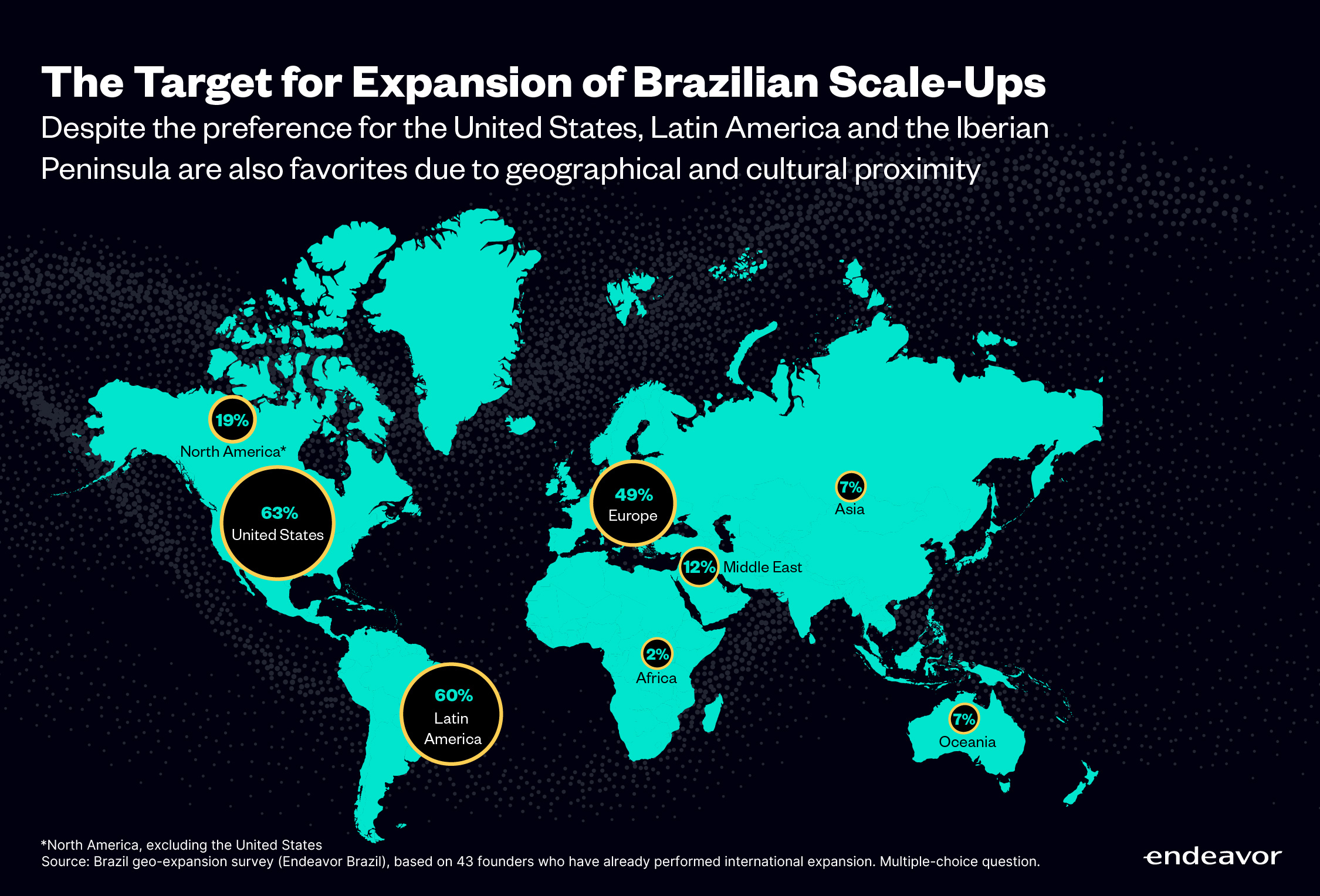
Choosing where to expand is as important as deciding when. The question is not which market is “right”, but which strategy compounds learning faster for the business being built.
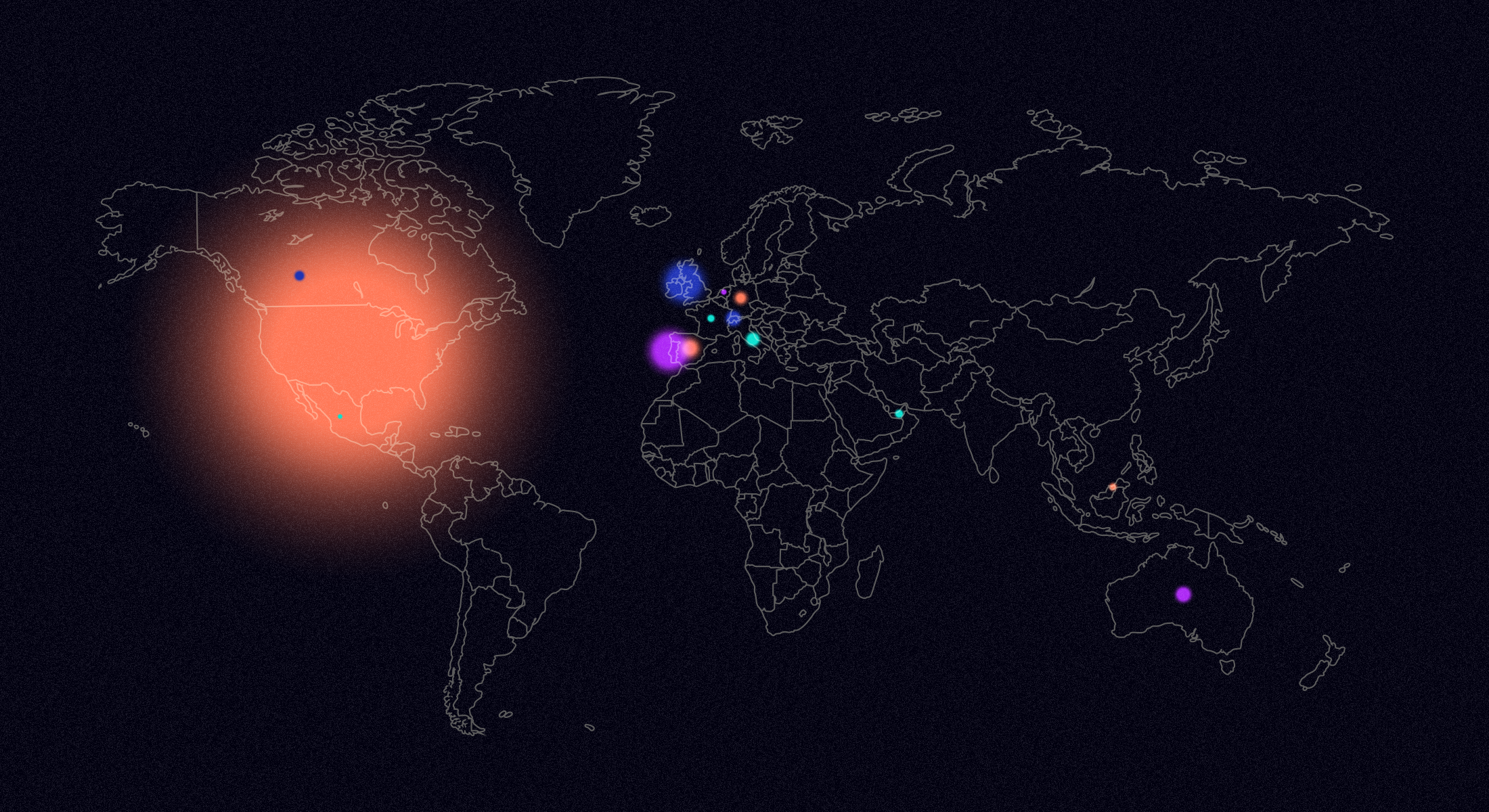
Among the founders surveyed who have already expanded internationally, 63% targeted the United States, followed closely by Latin America (60%) and Europe (49%), with Portugal and Spain emerging as common entry points. The prominence of the United States reflects its scale, purchasing power, and global relevance as the world’s largest technology market.
Founded: 2012
Founders: João Del Valle, Alphonse Voight and Wagner Ruiz
EBANX began expanding its payment operations in 2015.
By 2025, 65% of gross profit came from markets outside Brazil (20% outside LATAM).
36% of Total Payment Volume (TPV) was generated by APAC companies.
Strategy: From LATAM to the world
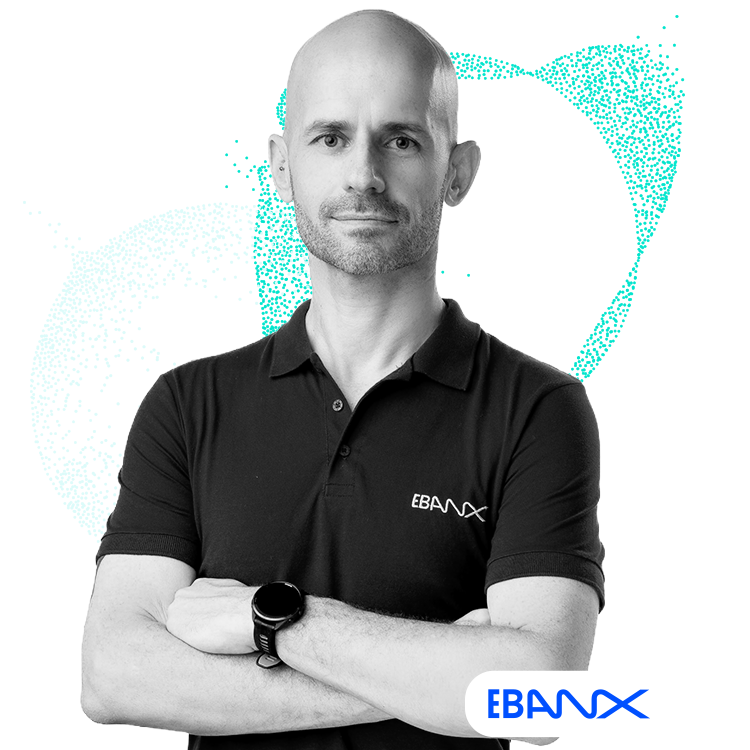
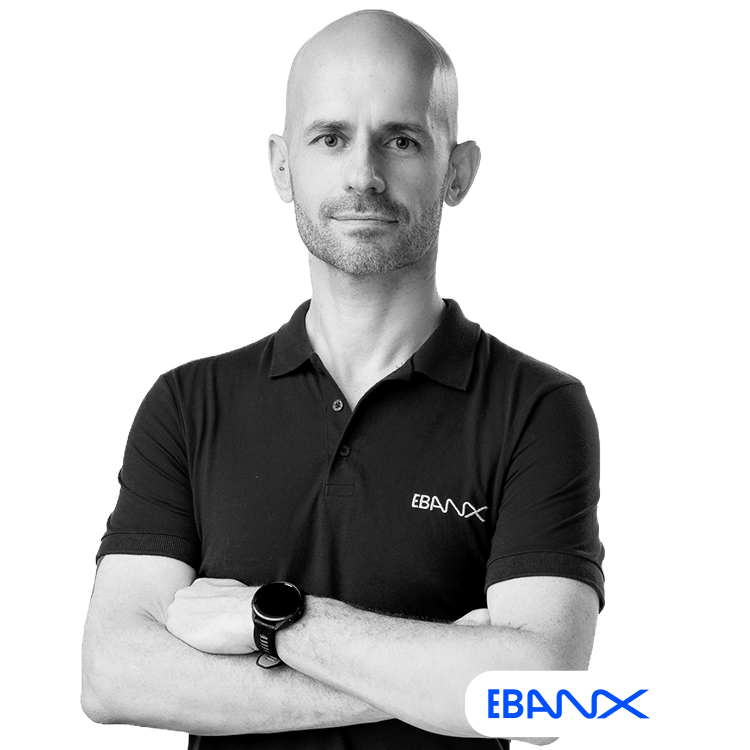
Some founders prefer starting with culturally or geographically closer markets, which was the case of João Del Valle, CEO and co-founder of EBANX. After consolidating its position in Brazil, the company expanded across Latin America — entering Mexico, Colombia, Peru, and Chile between 2015 and 2016.
In recent years, EBANX has continued to grow and now counts on local experts in every market where it operates, including Latin America, India, Africa countries, and the Southeast Asia region. As part of this expansion flywheel, it recently inaugurated its APAC headquarters in Singapore, strengthening its ability to support Asia-Pacific merchants expanding internationally and global brands — particularly from the US and Europe — entering the region.

Across all regions, market potential and customer demand are the main drivers for expansion. In the United States, 81% of founders cite market potential as a motivation, while 44% highlight the customer demand. In Latin America, there is a similar pattern, with 61% expanding due to market potential and 31% due to customer demand.
Examples like Nomad show that, while the United States is the largest venture capital market and one of the most liquid ecosystems for technology companies, founders really value proximity to clients. According to a global research by Index Ventures, 76% of founders go to the U.S. to be closer to customers. This dynamic is reflected in the growing presence of Brazilian companies in the United States. According to the U.S. Consulate General in São Paulo, hundreds of Brazilian companies have invested in the United States over the years, creating more than 100,000 jobs and generating billions of dollars in U.S. exports. Each state, through its economic development agencies, maintains programs to encourage investments that create jobs. Entrepreneurs are advised to conduct extensive research, as each state is different. A starting point is to consider both the location of their current or potential customer base and the available transportation connections that would allow them to bring their products to market, including from a neighboring state.
Rather than defaulting to the largest available market, founders should prioritize the market that aligns with their strategy, capabilities, and positioning: the one where they can establish competitive advantage and accelerate traction most efficiently.
We often equate expansion with opening a local office. But this is just one possible outcome. Founders can begin with cross-border sales, test channels, layer in remote commercial coverage, and establish their local leadership after reaching density in the market.
Among the founders surveyed, opening a local office remains the most cited strategy (51%), but a significant share (43%) used international sales to step into new markets.
Early international moves tend to favor lean teams and controlled burn, avoiding heavy fixed-cost structures before product-market fit is proven abroad.
But it has its limits. In enterprise markets, regulatory navigation and trust-building with consultative sales do require boots on the ground.
The right model of expansion is the one that strengthens competitive advantage while preserving execution quality as the organization scales internationally.
Founded: 2015
Founder: Alessio Alionço
While the company serves customers in over 100 countries, the majority of its workforce is still based in Brazil.
Strategy: Made Brazil the center of its talent base
Pipefy’s trajectory illustrates this. Founded in Curitiba in 2015, the company provides workflow automation software to enterprise clients in more than 100 countries, while keeping the majority of its workforce and operations anchored in Brazil. Its expansion began fully digital, with an English-language product and inside sales based in Brazil. As deal size and complexity increased, the model adapted. While mid-market accounts were served remotely, large enterprise contracts (particularly U.S. and India) demanded local presence.
Founded: 2003
Founders: Marcos Boschetti and Fabiano Kerber
Accelerated global expansion through M&A, expanding its client network and international talent pool.
Strategy: Advanced global expansion through M&A
Nelogica followed a different path. Founded in Porto Alegre, the company accelerated its global presence through an M&A transaction that significantly expanded its client base, adding more than 300,000 users to its portfolio. The acquisition also brought substantial manpower into the organization, and the current priority is integrating operations and capturing synergies.
Today, Nelogica operates with a decentralized structure: developers distributed across Europe, a marketing team in Italy, a sales team in the United States, and teams in Brazil and other Latin American countries such as Colombia. Its footprint spans every continent except Asia.
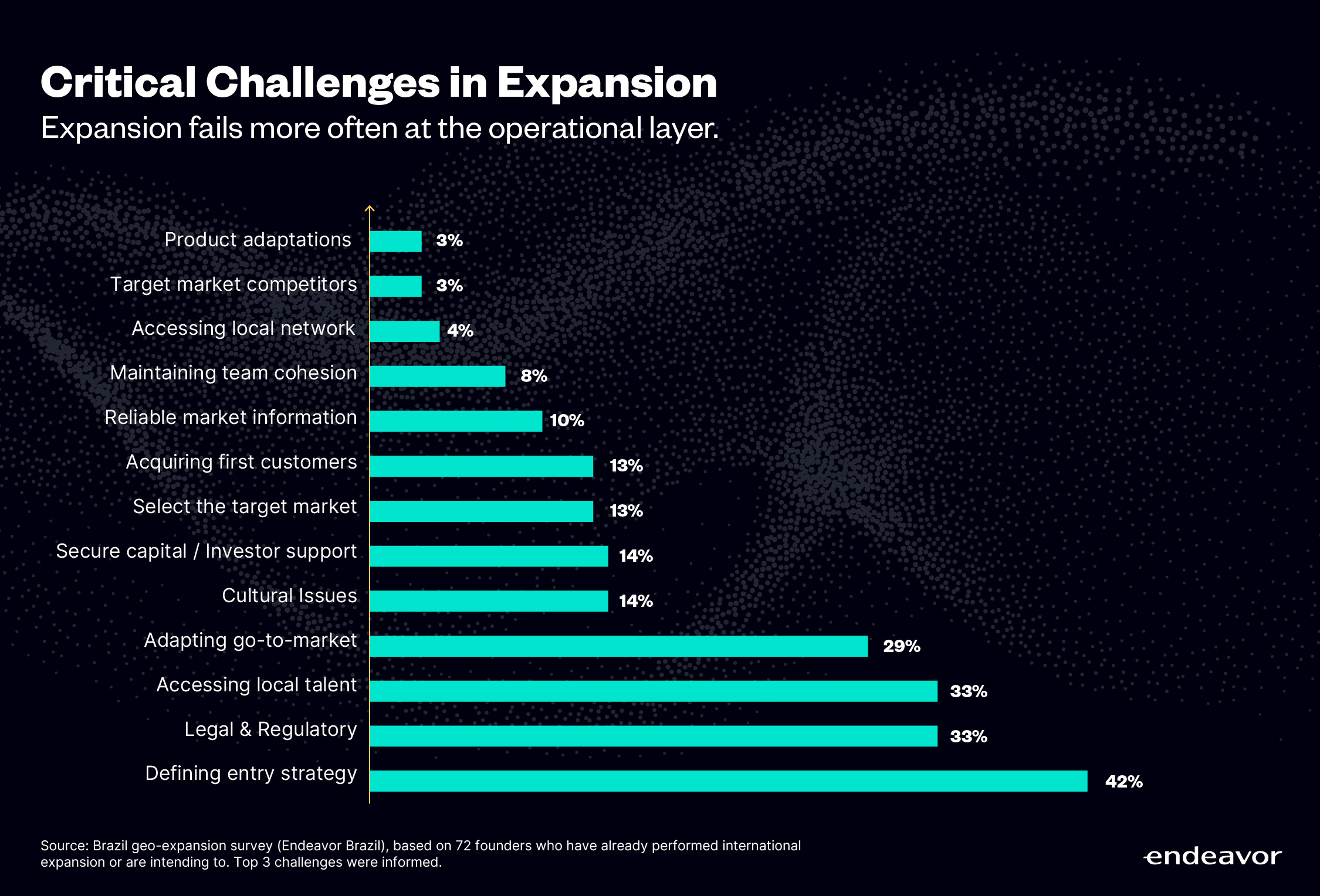
Expansion looks less like a geographic extension of domestic success and more like an operational rebuild. Product, go-to-market, and talent strategies present founders with complex adaptation challenges.
In a new market, founders often arrive as unknown players, competing against incumbents with local relationships and familiarity with regulatory and cultural patterns. The credibility, network density, and brand equity built at home rarely travel with you.
One of the most frequent consequences of this reality is the need to rethink the go-to-market strategy from the ground up.

In the United States, the main challenges are related to integrating into the market: access to talent (52%) and go-to-market (48%). In Latin American markets, the same two challenges lead the list(35% and 46%, respectively). In Europe, the challenge landscape is more diversified, with go-to-market and regulatory requirements cited by 29% of founders. Regardless of location, entrepreneurs seeking to mitigate risks should avoid attempting to replicate their domestic scale straightforwardly. Building large, capital-intensive structures under the assumption that acceptance will transfer automatically often amplifies the risk of expansion rather than reducing it.
Expansion only works when it is a real priority for the founder. Entrepreneurs and investors repeatedly mentioned how critical it is for the founder or a very senior leader to be present at the beginning of the expansion, with allocation of time, people, and capital. Expanding “little by little, when there’s time left” usually leads to fragile initiatives.
VTEX’s early international expansion illustrates this dynamic. The move was driven by the conviction of its founders and co-founders, who treated expansion as a strategic priority rather than a side initiative. The company’s first office abroad, in Argentina, was opened by Mariano Gomide, one of the company’s founders, and Alexandre Soncini, a co-founder, themselves. By being directly involved on the ground, they were able to validate the thesis, refine the model, and demonstrate that international expansion was not only viable, but repeatable.
Where founders cannot be physically present, the importance of a strong “landing team” increases. It must be someone deeply embedded in the company’s culture and strategy, with enough legitimacy and autonomy to represent headquarters in moments of ambiguity.
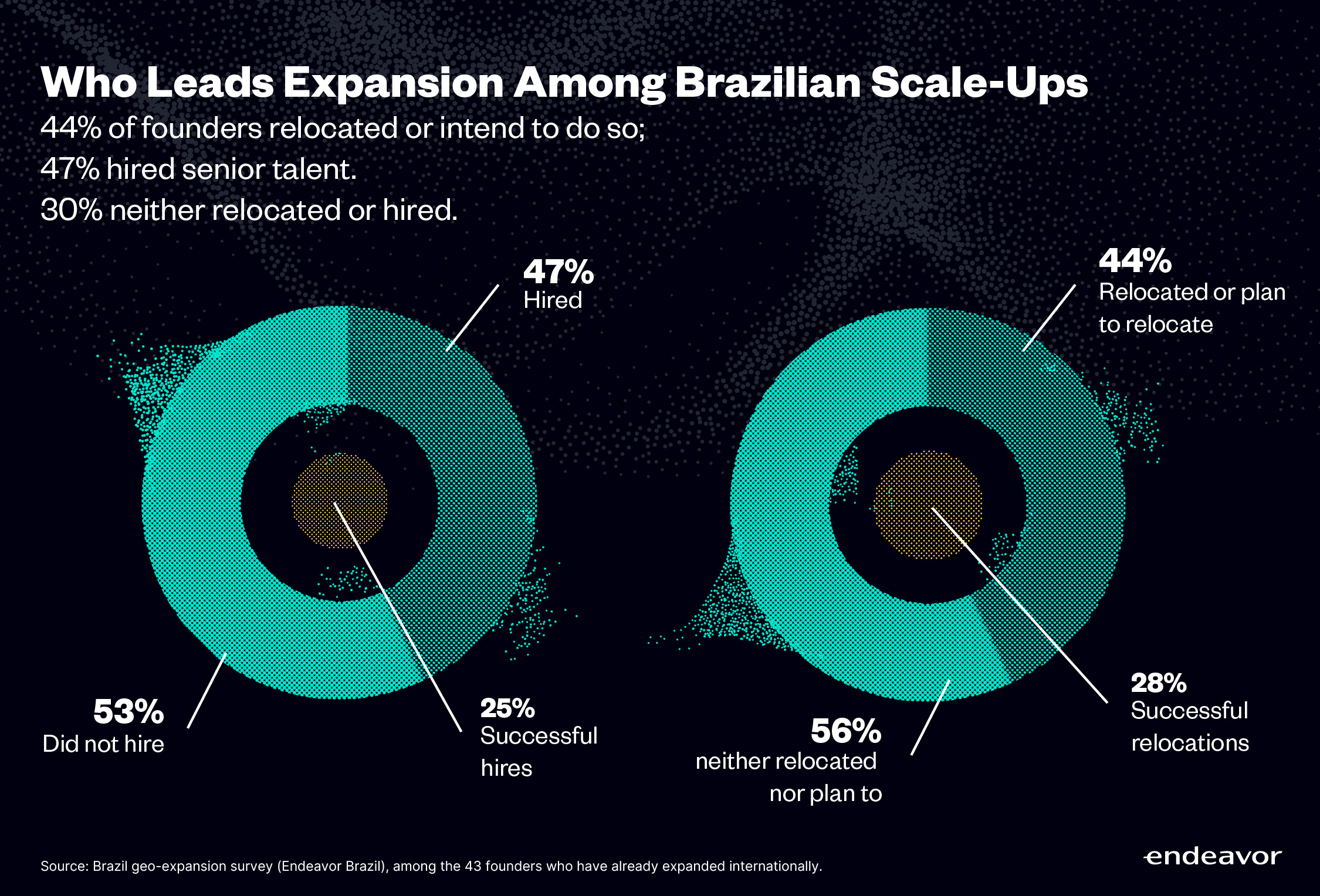
In our survey, 44% of founders relocated or intend to do so, 47% hired senior talent, and 30% neither relocated nor hired talent.
While 28% of founders surveyed say the relocation was decisive for the strategy, 55% of those who hired talent evaluated the move as successful.

Alex Szapiro, SoftBank
Permanently or not, entrepreneurs who successfully lead global expansions are somehow engaged in the new market. Many founders adopt a hybrid rhythm.
At EBANX, João Del Valle maintains a rhythm of at least one intercontinental trip per month. With commercial teams operating across multiple countries, especially in enterprise sales contexts, executive presence becomes a strategic lever. For global partners, it reinforces long-term commitment. For local teams, it creates proximity to leadership and sharpens alignment.
Beyond symbolic value, the exposure feeds the founder’s own judgment. Being on the ground provides insight that goes beyond performance metrics, capturing cultural dynamics, market atmosphere, and leadership quality — elements that directly influence execution.
When founders cannot be physically present, they should appoint trusted senior leaders with cultural authority and autonomy to represent the company, ensuring that expansion is led with conviction rather than treated as a peripheral initiative.
Expansion also should not come at the expense of the business that made it possible.
Across conversations with founders, one principle surfaced repeatedly: expansion only works when the core remains strong. The leadership team who stays is just as critical as the one that goes. Companies that scaled internationally without eroding their original market had something in common: autonomous, credible operators capable of sustaining execution, culture, and growth at home.
Expansion, therefore, demands discussions around succession and decision rights. Who owns the core? Who owns the frontier?
Founded: 2000
Founders: Mariano Gomide and Geraldo Thomaz
Present in 40+ countries, the founders lead international expansion while a strong leadership team runs the core business in Brazil.
Strategy: Founder-led global expansion
At VTEX, Mariano Gomide and Geraldo Thomaz understood that it would be impossible to lead global expansion and simultaneously guard the Brazilian core. So they chose to personally lead the entry into new markets, while building a strong internal structure of partners, vice presidents, and managers at the core.
Mariano Gomide, VTEX
Throughout the journey, the core must generate cash, financing the early mistakes of the international operation, while global expansion can simultaneously strengthen the core business through the lessons learned in other markets.

Expansion rewards companies that work well with people as carefully as they work with their products.
Building the team requires defining which capabilities must be physically embedded in the new market and which can remain centralized.
Technical, product, and performance-driven functions
Functions closest to the customer, such as sales and partnerships
Roles that require cultural nuance — branding, communications, community
Close coordination with HR and legal: Compensation, Benefits, Employment Law and Culture
This becomes even more pronounced in mature, highly competitive hubs. Senior professionals often have multiple offers from established global companies, with brand, scale, and stability on their side.
On Pipefy’s early expansion efforts, Alessio Alionço recalls that competing for engineers against global incumbents proved difficult. They had to pay more, offer more equity, and still risk being a secondary choice. The change came when the company doubled down on Brazilian talent. There were highly capable professionals who had never had the opportunity to build a global product from their home country as a value proposition. With the same level of investment, the long-term ambition and engagement from Brazilians, especially in challenging moments, proved to be materially different.
Still, in B2B enterprise markets, hiring locals is inevitable to compound credibility faster through trusted intermediaries. Ricardo Josuá credits part of Pismo’s international success to the hiring of the very experienced Vishal Dalal as Global CEO. Based initially in England, and later overseeing offices in England, India, and Singapore, Vishal’s network shortened cycles that would have been difficult to compress remotely.
Founders should treat team design as a strategic lever of expansion: which roles must be embedded locally, and which remain centralized? How to pair trusted internal leaders with regional talent?
When teams begin to operate across borders and time zones, communication, decision-making, and cultures change. Investing early in an integrated culture becomes essential to sustain alignment, decision-making quality, and execution standards at scale.

Alessio Alionço, Pipefy
While accessing local talent fast is essential, hiring too quickly, before cultural foundations are clear, often generates fragmentation and identity loss.
A balanced, 50/50 approach often proves more effective: pairing an internal leader who deeply understands the company’s culture with local talent who brings regional expertise.

Mateus Bicalho, Hotmart
The first generation of international success stories proved that global expansion was possible and paved the first references. But references alone are not enough. We believe that a more global, inter-connected Brazilian ecosystem requires one generation supporting the other: investors backing founders abroad, entrepreneurs promoting connections, sharing their learnings, and becoming advisors.
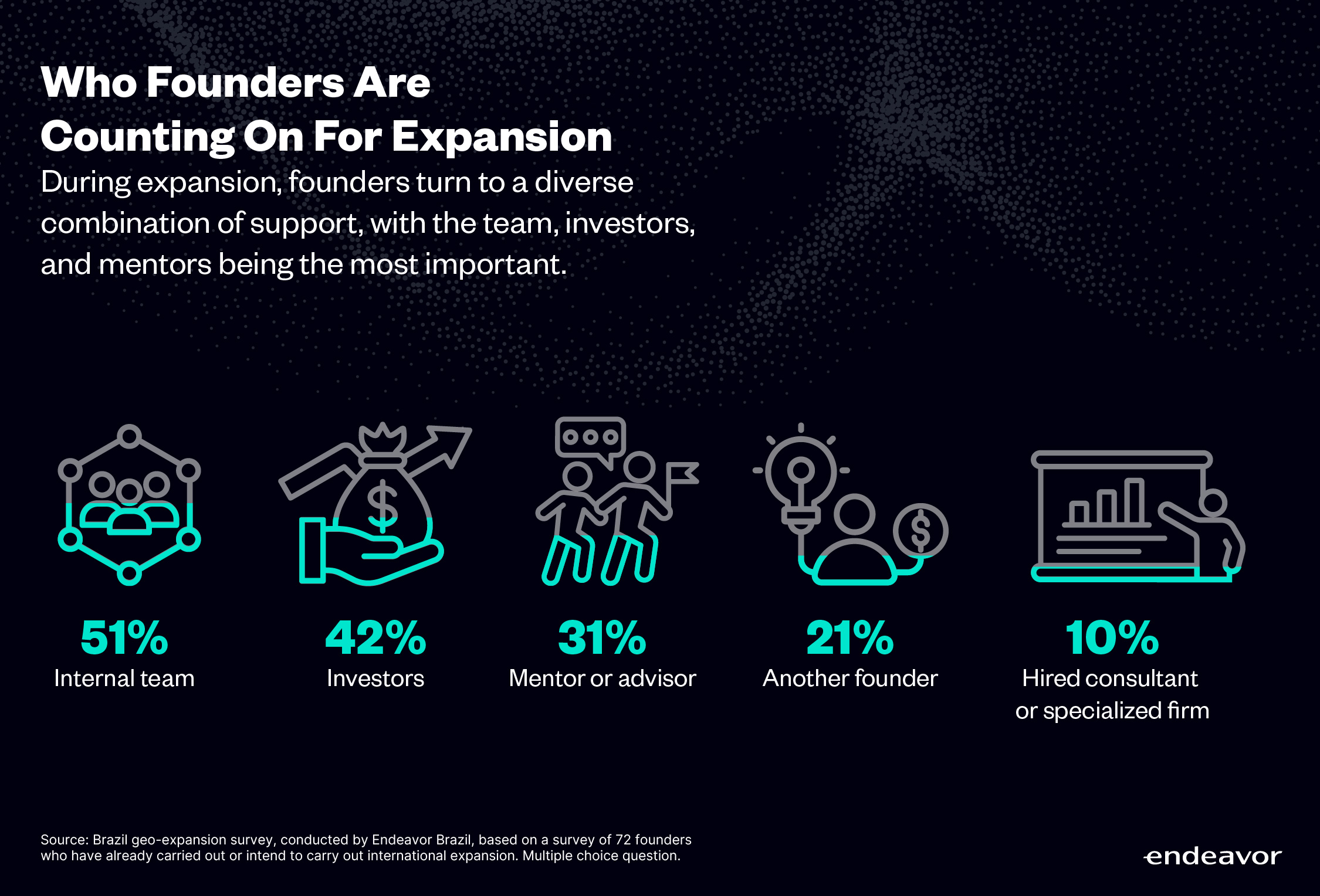
Founders in our survey consistently point to trusted relationships as a decisive factor: 68% have received external support during their expansion, while only 32% relied exclusively on their internal team.
This becomes even more critical in large and dense ecosystems such as the United States, where access, introductions, and reputation are often difficult.
In our survey, after the internal team (51%), investors are the most relevant ally in international expansion (42%). In the American context, according to Index Ventures, 52% of founders consider it important or extremely important to have at least one U.S. investor for the entry strategy.
Investors who understand the mechanics of cross-border growth are highly valuable. The ones who have seen expansion cycles before help founders avoid costly mistakes such as premature hiring, regulatory frictions, overbuilding local infrastructure, or entering the wrong market altogether. In some cases, the most valuable intervention can be restraint, a timely “not yet”.
Bring market intelligence, access to networks, and credibility at a moment where the company has none locally.
Push for speed without structure, scale without validation, or entry before readiness.
or
Discourage global ambition without strategic assessment, delay expansion even when it could unlock meaningful growth.
At Nelogica, this kind of partnership supported the expansion process. Beyond capital, investors elevated the quality of strategic decisions. They opened the right doors, facilitated key introductions, and shared practical insights on how to navigate unfamiliar markets with discipline and clarity. For Marcos Boschetti, their insights and contribution opening doors and making introductions influenced how the company sequenced markets, assessed risks, and defined its pace of expansion.
Expansion is capital-intensive. Therefore, capital should not be raised to “figure out what to do abroad”, but bring traction to what already exists. It consumes leadership attention, organizational bandwidth, and cash, sometimes more than originally planned.
Investors look for practical business evidence — revenue, clients, proof of competitiveness — rather than an abstract ambition. Mature companies should treat expansion as a defined investment thesis: they allocate a specific budget, separated from the core, with clear milestones and an explicit learning horizon.
By learning from founders who have already walked this path, choosing investors who understand cross-border growth, and grounding their plans in realistic assumptions, Brazilian entrepreneurs can become more confident with international expansion. We invite founders to not fear or see this as a solitary journey. As each experience succeeds, we collectively strengthen the reputation of Brazilian talent abroad and reinforce Brazil as one of the most vibrant and globally relevant ecosystems within Elsewhere, the markets historically overlooked by traditional venture capital.
This report was made possible thanks to the support of:
This project would not have been possible without the collaboration, insights, and support from many people in our network.
Media Partner:
Endeavor Global Insight team: Leah Barto, May Galani and Carol Martinez
Survey supporters: Alexia Ventures, General Atlantic, NXTP Ventures, Canary, Norte Ventures, ONEVC, Monashees, DGF, Valor Capital Group
Interviewees
Entrepreneurs
João Del Valle (Ebanx)
Mariano Gomide (VTEX)
Ricardo Josuá (Pismo)
Alessio Alionço (Pipefy)
Lucas Vargas (Nomad)
Marcos Boschetti (Nelogica)
Mateus Bicalho (Hotmart)
Cassio Bobsin (Zenvia)
Carlos Souza (Logcomex)
Eduardo Ourivio (Grupo Trigo)
Endeavor Staff
Caela Tanjangco (Endeavor Global)
Patrick Kaper (Endeavor México)
Endeavor Network
Alex Szapiro (SoftBank) – Ambassador
Luiz Ribeiro (General Atlantic) – Ambassador
Michele Levy (Ilhabela Holdings) – Ambassador
Kiko Lumack (Valutia)
Eduardo Fuentes (Valutia)
Bruno Lino (Valutia)
Alexandre Soncini (VTEX)
Bernardo Piquet
Maristela Calazans (Nubank)
Christel Hupfeld (Gunderson Dettmer)
Benjamin Wohlauer (USA Consulate in Brazil)
About Endeavor Brazil
We are the Global Network of Trust of, by, and for entrepreneurs — those who dream bigger, scale faster, and reinvest their success. Guided by our belief that high-impact entrepreneurs transform economies, Endeavor has been building thriving entrepreneurial ecosystems in emerging and underserved markets since 1997. In Brazil, our mission is to consolidate the country among the world’s leading innovation ecosystems.
Endeavor Brazil’s Research contributes to this ambition by generating data-driven insights and practical case studies on the drivers of the Brazilian entrepreneurial ecosystem. Leveraging Endeavor’s footprint, our studies explore the conditions that foster high-growth entrepreneurship, equipping founders and ecosystem leaders with the knowledge to scale companies and strengthen Brazil’s innovation landscape.
For more information, contact karina.almeida@endeavor.org.br